

Kassapa Buddha : ค้นหาหนังสือธรรมะ หน้า 8 / 1
หน้าหนังสือทั้งหมด
130
Monasteries and the Teachings of Buddha in Thailand
monasterylz of Thailand. Sometimes it is called “Ongsamonitee”. It is said that Buddha can attain Nirvana. The knowledge that Buddha has is called “parinibbana”. The meditation in the original meaning
This text discusses the importance of Buddhist monasteries in Thailand, referred to as Ongsamonitee. It explains Buddha's attainment of Nirvana and the concept of Parinibbana, emphasizing meditation a
52
Raising Children to Be Smart and Virtuous
families, have everything they want, but receive little parental supervision. These children have the highest chance of becoming unwholesome.
Children of Type IV families receive continuous knowledge
เนื้อหานี้เกี่ยวกับการเลี้ยงดูเด็กตามหลักธรรมของพระพุทธเจ้า โดยนำเสนอคำสอนที่ช่วยให้เด็กเติบโตเป็นคนดี โดยเน้น 3 คุณสมบัติสำคัญ ได้แก่ ไม่มีความยุ่งยาก, มีสติปัญญา และมีความเมตตา ผู้ปกครองควรพิจารณาคุ
173
The Power of Honesty in Blessings: Lessons from Venerable Angulimala
A respected senior monk gave an explanation regarding this matter. He said, “A blessing’s sacredness” is dependent upon “how honest the blessing-giver is towards his virtues.”
If a blessing-giver is
In this narrative, a senior monk explains that the strength of a blessing is tied to the giver's honesty about their virtues. He illustrates this through the story of Venerable Angulimala, a reformed
175
Training Oneself in Non-Recklessness by Practicing Austerity
Chapter 40
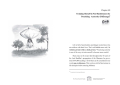
Training Oneself in Non-Recklessness by Practicing Austerity (Dhütanga) 4
Life is full of uncertainties and danger awaits those who are reckless with their lives. The Lord Buddha once sa
Chapter 40 emphasizes the significance of non-recklessness through the practice of austerity as taught by the Lord Buddha. It highlights that life is filled with uncertainties and that reckless behavi
181
Understanding External and Internal Fools in Buddhism
1) External Fools include non-Buddhists. They are determined to demolish Buddhism, whether they are of other religious affiliations or not. They typically try to cast aspersions upon Buddhist monks. W
In Buddhism, External Fools are non-Buddhists who seek to distort and undermine Buddhist teachings, casting aspersions on monks and creating confusion. Internal Fools, on the other hand, are Buddhists
198
Teaching Humility and Modesty Through Meditation
teaching ourselves humility and modesty. There may be times when an apology is required. Some difficulties are caused by our own carelessness, perhaps by damaging others' possessions, which can be sol
This text emphasizes the importance of humility and modesty, particularly in instances where apologies might be necessary due to personal oversights. It highlights the significance of staying calm and
253
Wat Buddha Centers in Europe
Paris
Wat Buddha Paris
10, Avenue de Paris, 77164 Ferrieres en Brie, France
Tel. +33-164-770-837
Mobile. +33-6-2285-8206
Fax. +33-164-772-837
Email: [email protected]
德國
Wat Phra Dhammakaya Bavä
Explore the Wat Buddha centers located in Paris and various cities in Germany, including Koenigsbrunn, Frankfurt, Stuttgart, and Langenargen. These centers provide spiritual services and a sense of co
255
Wat Buddha Locations in Sweden, Switzerland, and the UK
瑞典
Wat Buddha Gothenburg
Ostra Aroldgatan 17B.42443 Emsing Backa. Sweden.
Tel. + (46) -031-585799, + (46) -037-562722
Website : www.dhammadaya.se
E-mail : [email protected]
瑞士
Wat Buddha
Discover various Wat Buddha temples located in Sweden, Switzerland, and the UK. Each temple offers unique cultural experiences and is a place for meditation and community gatherings. The Wat Buddha Go
18
Understanding Dhammakāya and Theravāda Manuscripts
and is ‘spiritually reborn’. The dhammakāya becomes her new identity as the milk nourishes her spiritually. It is something she is given as a verbal teaching.
To add the material from the Apadānas is
This text delves into the doctrine of dhammakāya, representing a new spiritual identity that arises from teachings, akin to nourishment from milk. It connects the concepts found in the Agañña-sutta, i
37
Exploring the Concept of Dhammakāya in the Aggañña-sutta
IV. Reference 1: Dhammakāya as the Tathāgata’s Designation
The first Pali reference to the term dhammakāya that is well known to all previous works is a passage in the Aggañña-sutta, wherein the term
This text discusses the term 'dhammakāya' as referenced in the Aggañña-sutta, emphasizing its importance in defining an heir of dhamma and the Tathāgata’s true son. The conversation between the Buddha
38
Understanding the Concept of Dhammakāya in Buddhist Thought
D.III.84
Vāsettha and Bhāradvāja, he whose confidence in the
Tathāgata is settled, rooted, established, solid, irremovable by
any ascetic or brahmin, any deva or Māra or Brahmā or anyone
in the world
In this passage, Vāsettha and Bhāradvāja discuss the unwavering confidence in the Tathāgata, stating that those deeply rooted in dhamma can claim to be heirs of dhamma. The term 'dhammakāya' and its i
42
Saddhā: The Criterion of Being the Tathāgata's Son
Saddhā: Criterion of being the Tathāgata's Son
The first point to be looked at is the criterion of being the Buddha’s ‘true son’ which is, in this passage, defined by means of his
irremovable confiden
This text discusses the criterion of being the Tathāgata's son, emphasizing the irremovable confidence (saddhā) in the Buddha. It defines this confidence as settled and unchangeable despite external i
60
Understanding Dhammakāya: The Essence of Transcendental Dhamma
Arhatship (arahattamagga).86 Therefore, the particular path is not a mere ‘collective title’ of the path-constituents but the ‘essential totality’ by which a ‘body’ is defined.
The dependence of funct
This text discusses the concept of Arhatship and the definition of Dhammakāya in the context of Buddhist philosophy. It argues that the path should be seen as an essential totality, forming a 'body,'
13
The Story of the Buddha and Thevadas
among Buddhists, is a story of the Buddha from Dusit realm, who visited the earth as Siddhata, the royal son of King Suddhothana and Queen Maya.
The most quoted story of Buddhism concerns goddess M
The text narrates the story of the Buddha's earthly life as Siddhata, son of King Suddhothana and Queen Maya, and the roles of the goddess Mekkhala and the Bodhisatta. It depicts the themes of moralit
577
The Interfusion of Chinese and Indian Cultures in Central Asia
Visualization of the Buddhas: The Interfusion of the Chinese and Indian Cultures in Central Asia as Reflected in a Fifth Century Apocryphal Sutra." PhD Dissertation. Yale University. Yamabe, Nobuyoshi
This dissertation examines the merging of Chinese and Indian influences in Central Asia, particularly through apocryphal Buddhist texts. It also discusses various publications that delve into Buddhist
113
หลักฐานธรรมภายในคัมภีร์พุทธโบราณ ๑ ฉบับรวมงานวิจัยโดยอ้อ
หลักฐานธรรมภายในคัมภีร์พุทธโบราณ ๑ ฉบับรวมงานวิจัยโดยอ้อ
Answer: Because the beings have āpatti, [from that they] cannot see even though Buddha-s and Bodhisattva-s come. In addition, Buddha’s dharmak
บทความนี้สำรวจหลักธรรมที่ถูกบันทึกในคัมภีร์พุทธโบราณ โดยกล่าวถึงการที่ beings ไม่สามารถเห็นพระพุทธเจ้าได้เนื่องจากกรรมที่มีอยู่ หากใจไม่บริสุทธิ์ โดยมีการอ้างอิงถึงพระพุทธเจ้าที่ส่งแสงนำทาง แต่การเห็น
72
Velama Sutta: The Power of Good Will
The Voice of Abstaining
7. Velama Sutta
“If one were to develop even just one whiff of a heart of good will, that would be more fruitful than... if one with a confident mind were to undertake the tra
This text discusses the teachings of the Velama Sutta, emphasizing that developing even a small amount of good will is more fruitful than significant material offerings and merits. It illustrates how
61
Understanding Dhammakaya Knowledge
The Dhammakaya Knowledge is taught by the Buddha to constitute the transcendental, blissful, eternal, and pure Self of the Buddha. Dhammakaya doctrines can be found in the scriptures of all major Budd
Dhammakaya Knowledge is a profound teaching from the Buddha that emphasizes the transcendental, blissful, and pure nature of self. This concept is integral to all major Buddhist schools, including The
158
Understanding Dhamma and Enlightenment
Attaining Dhamma: meditative attainment; a state of absorption in meditation where the mind achieves super insight and knowledge; knowing and seeing according to the truths.
Attainment of Dhammakaya:
This content delves into the concept of Dhamma as a state of meditative absorption. It explains the attainment of Dhammakaya, where deep insight allows one to see the reality of life. Key terms such a
159
Glossary of Buddhist Terms
GLOSSARY 155
Dhamma (Skt. Dharma): the truth; the natural condition of things or beings; the law of their existence; the ethical code of righteousness; the whole body of religious doctrines as a sys
This glossary outlines significant Buddhist terms. Dhamma refers to truth and the natural law of existence as taught by the Buddha. Dhammacakkappavattana Sutta is recognized as the Buddha's first teac